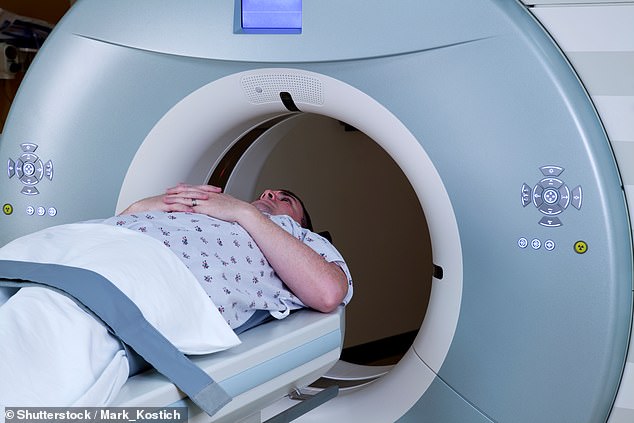
The study revealed that CT scans could lead to cancer in one of every 20 cases, with younger children facing a higher risk.
Computed tomography (CT) scans utilize X-ray technology to generate comprehensive internal images of the body.
The NHS performs approximately five million scans each year for various reasons including evaluating internal injuries following accidents and diagnosing conditions like cancer , strokes, fractured bones, or tracking the efficacy of treatments.
However, new findings from the University of California suggests that the scans might result in lung, breast, and various other cancers – with infants facing a ten times higher risk.
This comes as MailOnline reported Cancer care in the UK is described as being at 'breaking point' and falling short compared to other nations due to 'significant mismanagement'.
Cancer treatments delayed have turned into 'a lethal standard,' claim prominent physicians, stating that significant advancements won’t occur without drastic reforms.
Authoring an article in the medical journal The Lancet Oncology They fault the Labour administration for persisting with consultations on alterations instead of implementing them.
The latest research discovered that Approximately 103,000 cases of cancer were anticipated due to the 93 million CT scans conducted across the United States in 2023. — approximately three to four times higher than earlier predictions.
The likelihood of developing cancer due to CT scans is thought to be equivalent to alcohol Consumption and overweight bodies.
Researchers examined 93 million examinations involving 61.5 million patients in the U.S. to determine the frequency of cancer occurrence. developed .
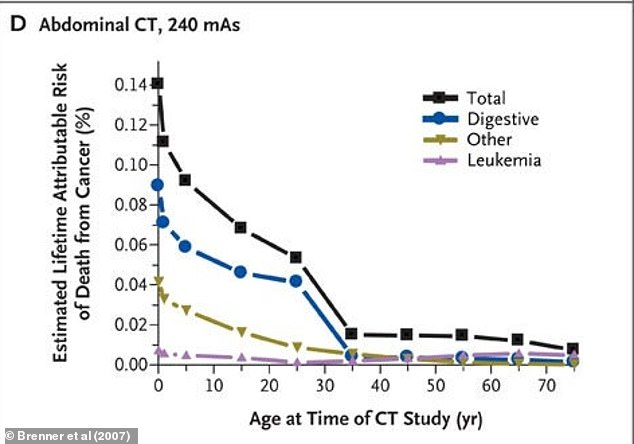
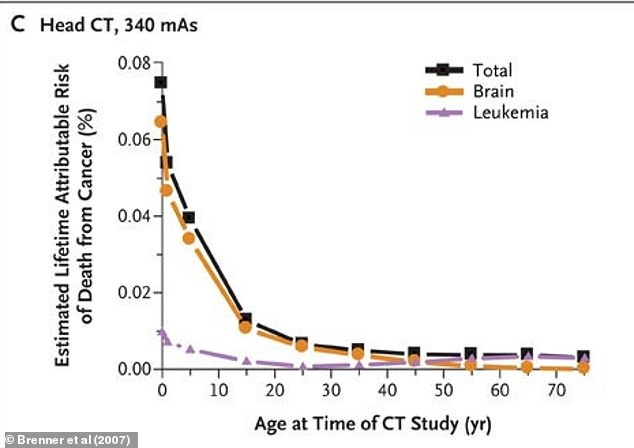
They discovered that for adult patients, scans of the abdomen and pelvis tended to result in more issues, whereas in pediatric cases, CT scans of the head posed the greatest risks.
Excess radiation is anticipated to lead to cancers such as those of the lungs, colon, leukemia, bladder, breasts, and thyroid.
The greatest risks were observed in individuals who had undergone a CT scan before their first birthday.
Lynda Johnson, who works as a professional officer for clinical imaging and radiation protection at the Society of Radiographers, stated: "Effective communication regarding the advantages and disadvantages of CT scans is crucial to safeguarding the public from potential damage."
Concentrating solely on risks can be unhelpful and may even discourage someone from undergoing a scan that could lead to an early cancer diagnosis in certain situations.
'A person getting a CT scan should receive comprehensive, precise, and pertinent details to help them grasp how it impacts them personally concerning their diagnosis, treatment, and possible ongoing care.'
The research, featured in the journal Jama Internal Medicine, highlighted that CT scan frequencies are significantly higher in the United States compared to those in the United Kingdom.
Dr Doreen Lau, who lectures on inflammation, ageing, and cancer biology at Brunel University London, stated: "These results do not imply that individuals should refrain from undergoing CT scans when advised by their physician."
'Most often, the advantage of identifying or excluding significant illnesses greatly surpasses the minimal potential for harm. This study underscores the importance of reducing non-essential imaging procedures and employing the least amount of radiation feasible, especially in areas with frequent CT scans.'
'When suitable, healthcare providers might also explore different imaging techniques that do not use ionizing radiation, like MRI or ultrasound — particularly for young individuals, or when multiple scans are expected.'
Stephen Duffy, an Emeritus Professor of Cancer Screening from Queen Mary University of London, stated: "For patients who are advised to undergo a CT scan, I would recommend proceeding with it."
Read more